Here is a simplified breakdown of the "2026 Reset Framework" to help you move from surviving to thriving.
The Core Concept: Friction is Data
Instead of viewing problems as failures, view them as signals.
Wins are clues: They show you what you should turn into a repeatable process.
Friction is a map: It shows you exactly where your business design is broken.
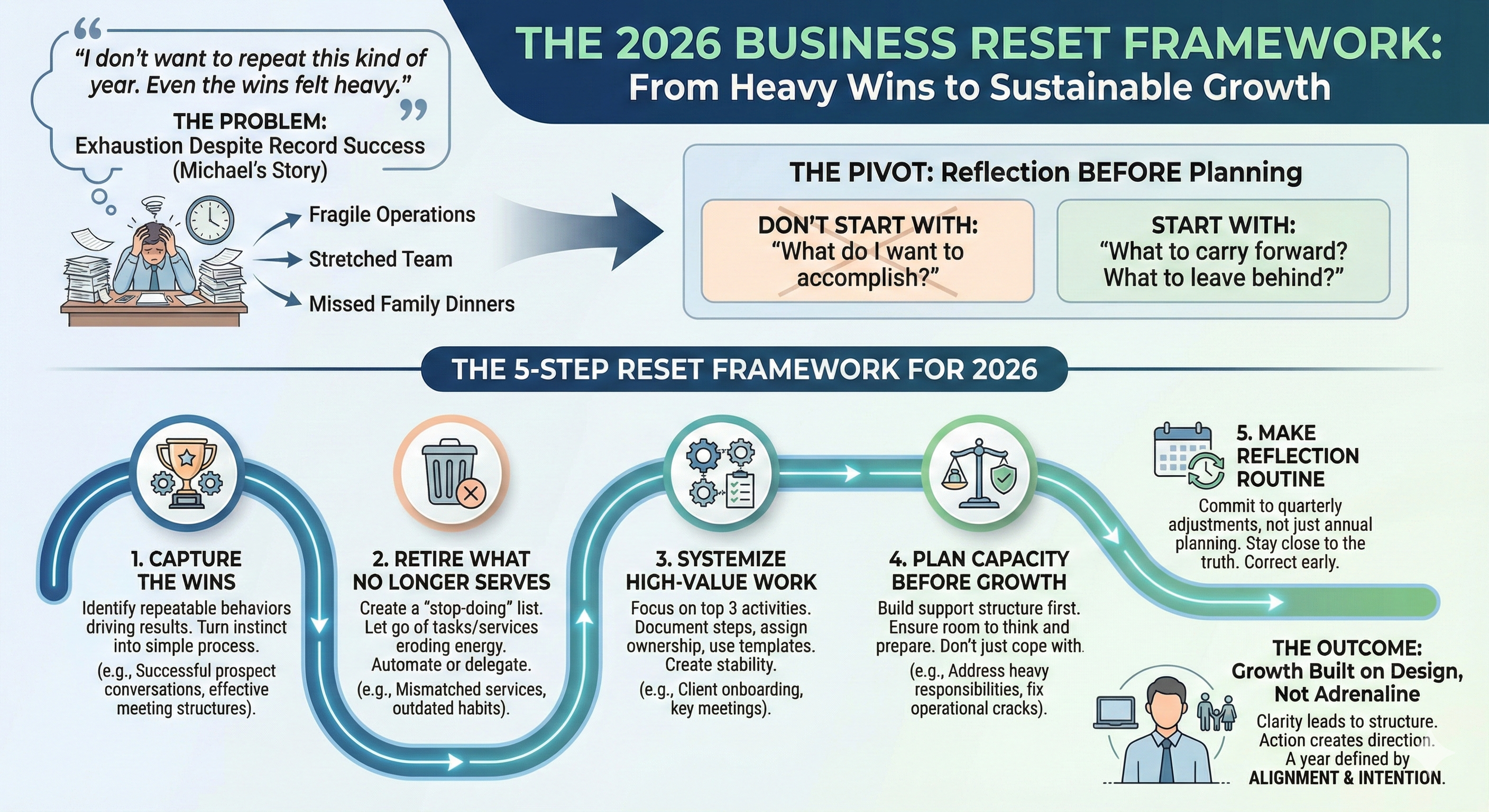
The 5-Step Reset Workflow
1. Capture the Wins
Identify exactly why things went well. If a specific email got a fast reply or a specific meeting style closed a deal, write down the steps.
Goal: Move from "acting on instinct" to "following a recipe."
2. Create a "Stop-Doing" List
Progress isn't just about adding more; it’s about removing weight. Identify tasks, services, or even certain types of clients that drain your energy without providing high value.
Goal: Delete, delegate, or automate anything that no longer fits your vision.
3. Systemize the "Big Three"
Pick the three most important things you do (e.g., onboarding, quarterly reviews, prospecting). Create templates, assign who is responsible, and use technology to handle the repetitive parts.
Goal: Create stability so you aren't "winging it" every time.
4. Fix the Foundation Before Adding Weight
Don't try to grow if your team is already stretched thin. Ask: "Can we handle 10 more clients today without breaking?" If the answer is no, fix your capacity first.
Goal: Build the support structure before you increase the workload.
5. Check the Compass Quarterly
Annual planning is too slow. Every three months, stop and look at your data. Are you still on track? Is the "heaviness" returning?
Goal: Catch small problems before they become big year-end burnouts.
The Bottom Line: Don't just plan for a bigger year; design a better one. Momentum is created when your systems grow alongside your ambition, allowing you to hit your targets without missing family dinners.